.svg)
.svg)
Extending the service life of industrial equipment involves implementing technical, organizational, and digital measures that keep a machine operational for longer, while maintaining its level of performance, reliability, and safety.
In industry, this approach addresses a major challenge: maximizing equipment availability while keeping operating costs under control. An aging machine does not necessarily pose an immediate risk if its condition is properly monitored, maintained, and adapted to its environment.
Faced with rising equipment costs, supply chain challenges, and increasing demands for production continuity, manufacturers today are seeking to optimize the lifecycle of their facilities rather than systematically replacing their machines. According to several international studies on industrial maintenance, unplanned downtime ranks among the leading causes of productivity loss in the industry. A predictive maintenance strategy helps reduce this downtime by detecting anomalies before they lead to a failure.
This approach relies on several complementary strategies: preventive maintenance, predictive maintenance, monitoring of critical parameters, modernization of operator interfaces, and the use of industrial equipment designed for long-term operation in demanding environments.
⇒ Did you know?
- Predictive maintenance can reduce unplanned downtime by up to 30%.*
- Maintenance costs can be reduced by up to 25%.*
- Equipment lifespan can be extended by 20 to 40 percent, depending on the application.*
*Source: Deloitte, studies on predictive maintenance.
⇒ Key takeaway : Extending the service life of industrial equipment relies on five key factors
- monitoring the actual condition of the machines;
- implementing preventive and predictive maintenance;
- monitor the operating environment;
- using appropriate industrial equipment;
- use data to anticipate failures.
Why is extending the service life of industrial equipment a strategic priority?
Industrial equipment often represents several years of investment, integration, and qualification. Replacing it involves not only a material cost but also significant operational consequences.
Changing equipment can result in:
- production shutdowns;
- dismantling and reinstallation;
- a new commissioning phase;
- adjustments to software and automation systems;
- operator training.
In many industrial sectors, keeping equipment reliable for a few more years can therefore represent a significant economic advantage. The goal is not simply to keep a machine running longer, but to maintain its performance throughout its entire life cycle.
An effective strategy makes it possible, in particular, to:
- reduce unplanned downtime;
- improve line availability;
- better plan maintenance;
- optimize capital investments;
- ensure production safety.
What are the main causes of industrial equipment aging?
The aging of an industrial facility is rarely the result of a single factor. It is generally linked to the accumulation of mechanical, environmental, and electronic stresses.
Environmental Stresses
The conditions under which equipment operates play a decisive role in its service life.
In an industrial environment, machines may be exposed to:
- high or fluctuating temperatures;
- significant amounts of dust;
- humidity;
- splashes;
- continuous vibrations.
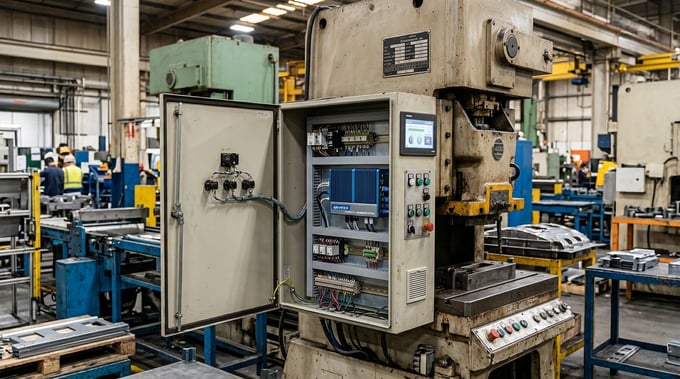
These conditions accelerate component wear and can lead to gradual failures. Electronic components are particularly sensitive to heat. A sustained increase in operating temperature accelerates their aging and can shorten their service life. For example, excessive heat inside an industrial cabinet can reduce the service life of electronic components. Similarly, uncontrolled humidity levels can lead to condensation or corrosion.
Aging of Electronic and IT Components
IT equipment used in industrial settings is particularly vulnerable when it is not suited to its environment. A standard computer installed on a production line may be subject to:
- dust buildup in its ventilation system;
- significant temperature fluctuations;
- vibrations;
- continuous use.
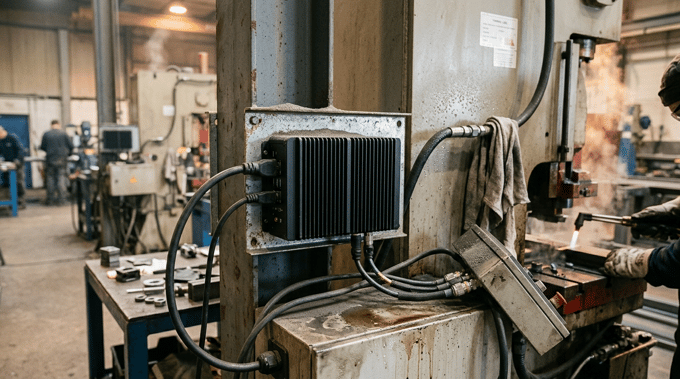
These challenges can lead to slowdowns, shutdowns, or premature replacements. That’s why you should opt for equipment specifically designed for these conditions, such as fanless industrial PCs or industrial panel PCs.
How can you extend the lifespan of industrial equipment?
According to a Deloitte study, predictive maintenance can reduce downtime by up to 30%, lower maintenance costs by up to 25%, and extend equipment lifespan by 20% to 40%, depending on the application.
Step 1: Assess the Actual Condition of the Equipment
The first step is to gain a clear understanding of the industrial equipment fleet. Before defining a maintenance strategy, it is necessary to identify:
- the age of the equipment;
- its frequency of use;
- failure history;
- critical components;
- operating conditions.
This analysis makes it possible to distinguish between equipment requiring enhanced monitoring and equipment that can continue to operate with standard maintenance.
Step 2: Implement Appropriate Preventive Maintenance
Preventive maintenance involves taking action before a failure occurs. It relies on scheduled procedures to monitor the condition of equipment:
- inspection of components;
- cleaning;
- replacement of wear parts;
- checking connections;
- checking operating parameters.
This approach reduces the need for emergency repairs and improves the predictability of maintenance operations.
However, it has one limitation: it relies primarily on a theoretical schedule. Equipment may require service before the scheduled date or may still be functioning perfectly. This is why manufacturers are gradually shifting toward predictive approaches.
Step 3: Transition to Predictive Maintenance Using Data
According to several studies on predictive maintenance, leveraging machine data can significantly reduce unplanned downtime and improve maintenance scheduling. This involves analyzing the actual condition of equipment using data collected in the field. As a result, IoT sensors can monitor various parameters:
- temperature;
- humidity;
- vibrations;
- energy consumption;
- machine cycles;
- alarms.
Analyzing this information helps identify abnormal trends before they cause a failure.
For example, a gradual increase in the temperature of IT equipment may indicate a cooling problem or the gradual deterioration of a component. Maintenance can then be scheduled at the most appropriate time.
-> Explore our full range ofIoT devices.
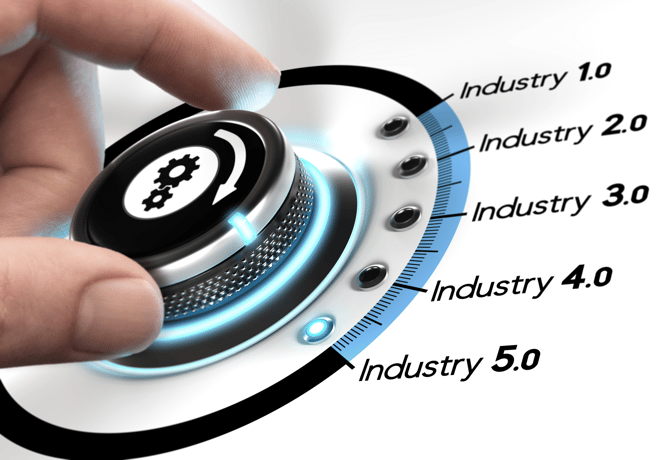
The Role of Industry 4.0 in Improving Equipment Reliability
Connecting Equipment to Better Anticipate Failures
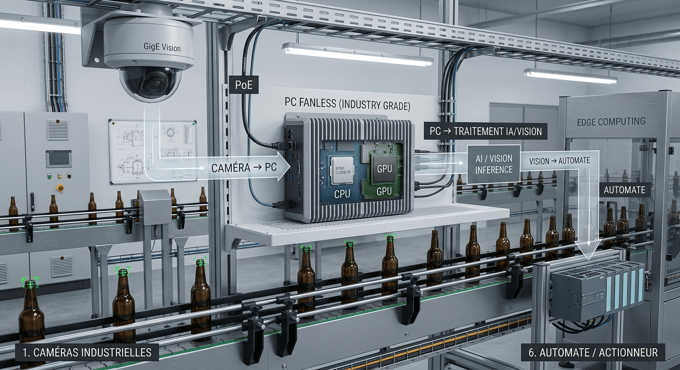
Industry 4.0 provides new ways to monitor and analyze data from facilities. A modern industrial architecture can operate according to the following principle:
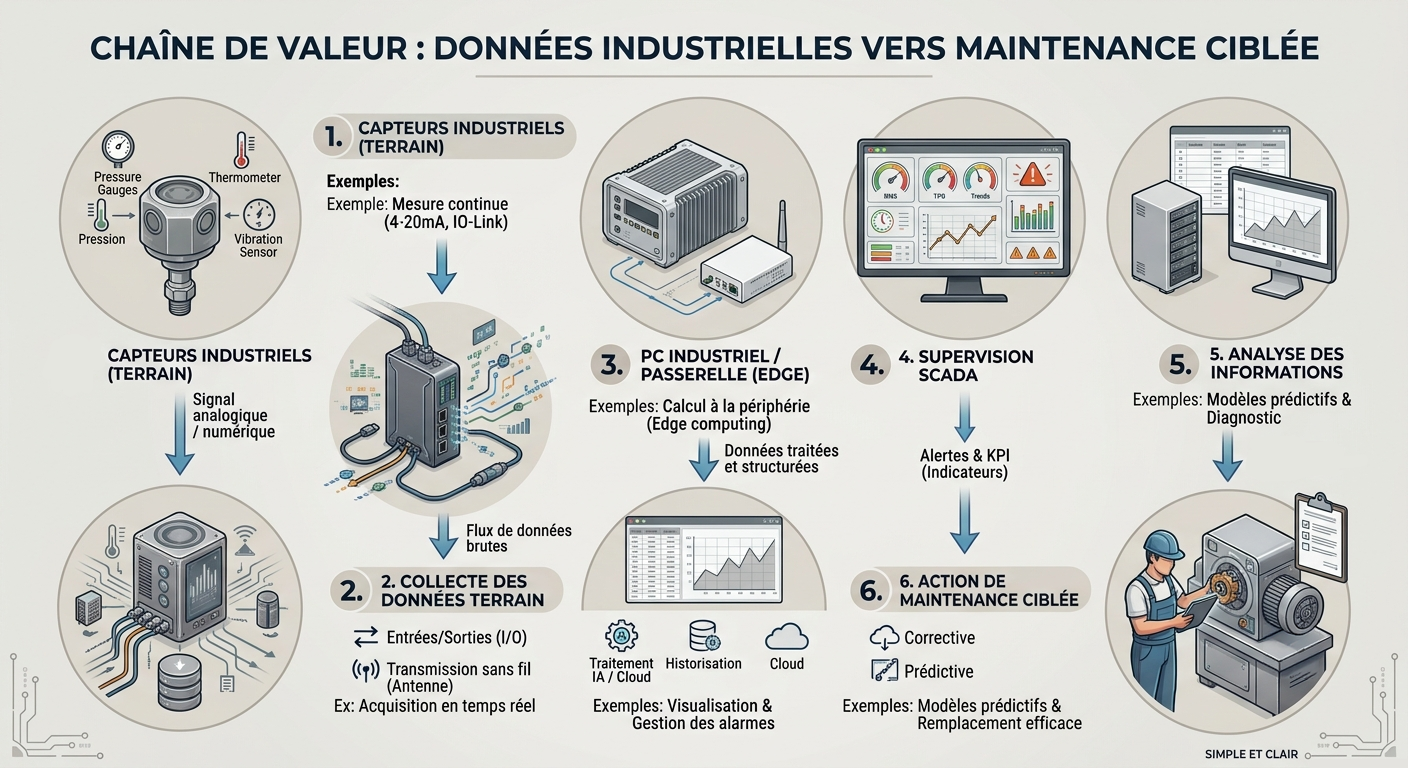
This approach enables a shift from a reactive to a proactive approach. Maintenance teams thus have more reliable information on which to base their decisions.
Why does the choice of industrial hardware affect the lifespan of equipment?
Why do fanless industrial PCs extend the lifespan of equipment?
IT equipment plays an essential role in modern facilities: monitoring, machine control, data acquisition, and communication with PLCs fanless industrial PCs are designed to operate in environments where a standard computer would quickly reach its limits.
Their fanless design helps to:
- limit dust buildup;
- reduce risks associated with moving parts;
- improve reliability in applications running continuously.
They are used in numerous industrial applications requiring high availability.
How does an industrial panel PC improve the reliability of production lines?
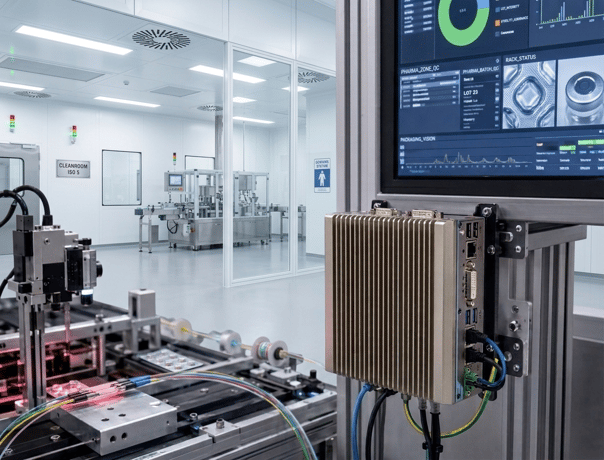
The interface between the operator and the machine also plays an important role in the reliability of the equipment. Anindustrial panel PC combines the display and the computing unit into a single device designed for the shop floor.
Depending on the model, they may offer:
- an IP65-rated front panel;
- a touchscreen that can be used while wearing gloves;
- resistance to industrial environments;
- integration with supervisory control software.
They are particularly well-suited for industrial HMI, production monitoring, and machine control applications.
Monitoring the environment to protect equipment
Temperature and humidity: two essential parameters
Environmental monitoring is a key factor in extending the service life of industrial equipment.
In certain sectors—such as food processing, pharmaceuticals, logistics, and warehousing—fluctuations in temperature or humidity can have significant consequences.
Continuous monitoring allows for:
- quickly detect deviations;
- avoid adverse conditions;
- maintain a usable history;
- improve compliance.
Temperature and humidity monitoring solutions thus contribute to better control over the lifecycle of facilities.
What return on investment can be expected from an equipment lifespan extension strategy?
The return on investment from a reliability improvement initiative is not limited to the cost saved by avoiding a breakdown. One hour of unplanned downtime can result in losses of several thousand—or even tens of thousands—of euros, depending on the industry, due to production interruptions, emergency maintenance costs, and delivery delays. That is why the ROI encompasses several dimensions:
Reduction in production downtime
Improved monitoring helps identify problems before they become critical.
Optimization of maintenance interventions
Maintenance teams can plan their actions in advance and avoid emergency interventions.
Postponement of major capital expenditures
When equipment remains reliable and performs well, its replacement can be planned based on sound industrial principles rather than being forced by a breakdown.
Improved Overall Availability
A better-monitored facility directly contributes to industrial performance.
2 Examples of Applications in an Industrial Environment
Extending the service life of an automated production line
An industrial company is experiencing intermittent downtime on an automated production line. Initial analyses point to several factors:
- a conventional computer used for monitoring;
- high temperatures in the machine environment;
- a lack of monitoring of operating conditions.
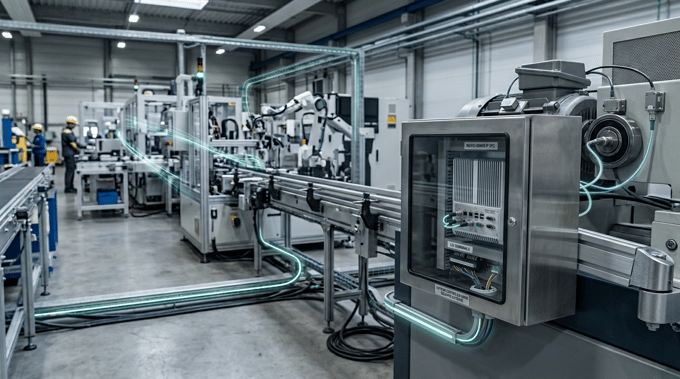
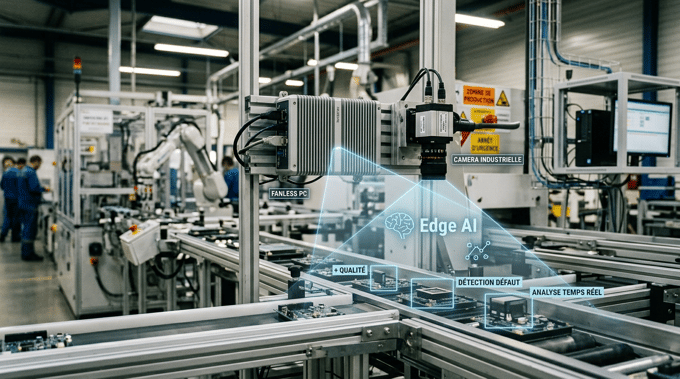
The company therefore decided to modernize its architecture with a suitable industrial PC, a more robust operator interface, and monitoring of environmental parameters. This upgrade enabled maintenance teams to gain better visibility into the system’s status and take action before a complete shutdown occurred.
After implementing continuous monitoring and replacing the computer workstation with a fanless industrial PC, the company saw a reduction in emergency interventions and improved availability of its production line.
Improving Field Maintenance Through Industrial Mobility
In certain environments, technicians must work directly on the equipment. Using a rugged tablet allows them to access technical data, maintenance procedures, or line-of-business applications directly in the field. These devices are designed to withstand industrial conditions:
- shocks;
- dust;
- temperature fluctuations;
- intensive use.
This mobility thus facilitates service calls and helps reduce downtime.
Extending the service life of industrial equipment is now a major challenge for companies seeking to improve their performance while managing their investments. This approach relies on a combination of tailored maintenance, smart monitoring, and Industry 4.0 technologies that provide a better understanding of the actual condition of facilities. Solutions such as fanless industrial PCs, industrial panel PCs, supervisory systems, and environmental monitoring tools help improve equipment reliability and ensure production continuity.
For manufacturers, the goal is no longer simply to repair equipment when a failure occurs, but to have the information needed to anticipate issues, optimize operations, and sustainably extend the equipment’s lifecycle.
In an environment where industrial equipment must remain operational for longer periods and where investments are increasingly tightly controlled, extending equipment lifespan is no longer solely a maintenance issue. It is a comprehensive approach that combines supervision, modernization, data management, and the selection of appropriate technologies. Companies that adopt this approach enhance the availability of their facilities, ensure production reliability, and sustainably optimize their investments.
FAQ: Extending the Service Life of Industrial Equipment
How can you extend the service life of an industrial machine?
It requires a combination of several actions: preventive maintenance, monitoring of critical parameters, analysis of machine data, and the use of equipment suited to the industrial environment.
What is the difference between preventive maintenance and predictive maintenance?
Preventive maintenance relies on scheduled interventions. Predictive maintenance uses real-time equipment data to anticipate failures.
Why use an industrial PC instead of a standard computer?
An industrial PC is designed to withstand harsh conditions such as vibrations, dust, temperature fluctuations, and continuous operation.
What parameters should be monitored to anticipate a failure?
The main parameters are temperature, humidity, vibrations, energy consumption, and data from monitoring systems.
See also: