.svg)
.svg)
The industrial temperature and humidity monitoring and control system uses environmental data in real time. It enables you to anticipate drifts, automate certain actions and improve the performance of buildings and industrial processes.
For a long time, monitoring was based on a passive logic: periodic readings, alarm thresholds and corrective action after incidents.
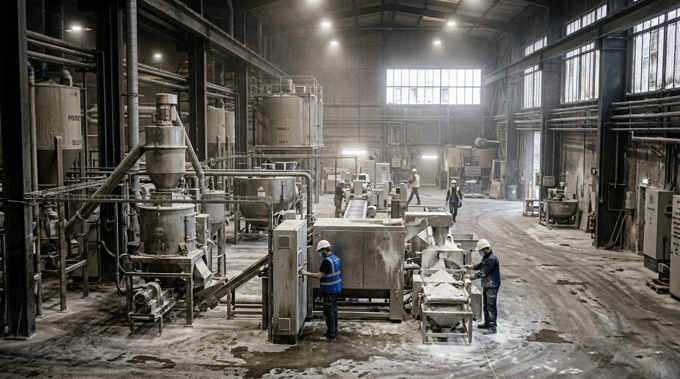
Today, industrial IoT technologies and LoRaWAN networks make the approach more proactive. Data is processed continuously. They can be used to control critical environments, reduce energy consumption and secure operations.
This evolution is a direct response to major industrial challenges: reducing operating costs, controlling quality risks and ensuring production continuity.
Why is passive monitoring showing its limits today?
At many industrial sites, environmental monitoring is still based on manual controls or spot checks. Alerts are only triggered once a threshold has been exceeded.
Reactions too late
Deviations are often detected once the impact is already visible: cold chain breakage, degradation of sensitive products or thermal drift of critical equipment.
Limited use of data
Temperature and humidity records exist, but are rarely analyzed. They are therefore not used to improve settings or anticipate drifts.
Energy inefficiency
HVAC systems still too often operate with fixed setpoints, without adapting to actual building conditions. This leads to avoidable over-consumption.
How does an intelligent temperature and humidity control system work?
Intelligent control is based on continuous monitoring of environmental conditions via connected sensors and an analysis platform.
1. Field data collection
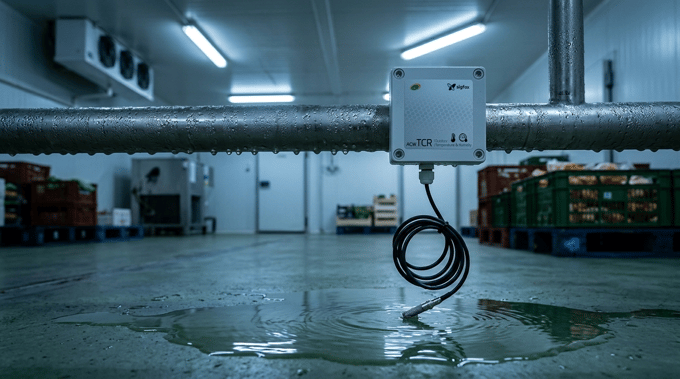
Industrial sensors continuously measure temperature, relative humidity and, as the case may be, CO₂ or VOCs.
LoRaWAN IoT sensors offer several key advantages: low energy consumption, long range, simplified installation and long autonomy.
2. Data transmission
Data is transmitted via a private LoRaWAN network, industrial gateways or secure Edge and cloud infrastructures.
This architecture makes it possible to supervise a wide range of environments: industrial buildings, cold stores, logistics warehouses, ECS networks or multi-building sites.
It also makes it easy to centralize data across multiple sites, for a global view of environmental conditions.
3. Analysis and drift detection
The system's value lies in the continuous analysis of trends. It is no longer simply a question of detecting when a threshold has been exceeded, but of identifying weak signals.
In this way, the system can detect a progressive drift in humidity, abnormal thermal cycles, instability in a cold room or an anomaly in an ECS network.
This approach makes it possible to move from a warning logic to a truly predictive logic.
4. Actions and supervision
Depending on the scenarios defined, the system can generate targeted alerts, adjust HVAC systems or automatically feed compliance histories.
As a result, technical teams have access to centralized supervision that can be exploited in real time, reducing the need for emergency interventions and improving overall responsiveness.
Main industrial use cases
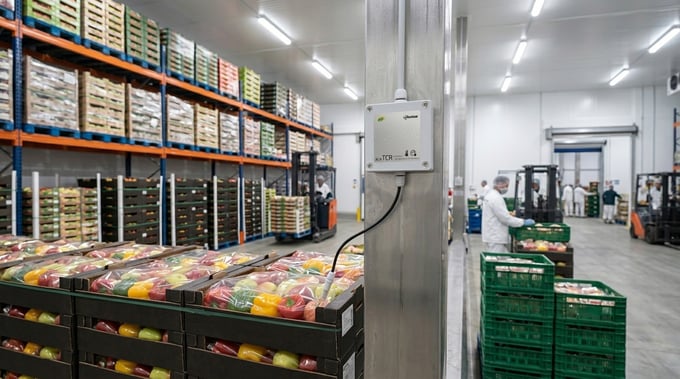
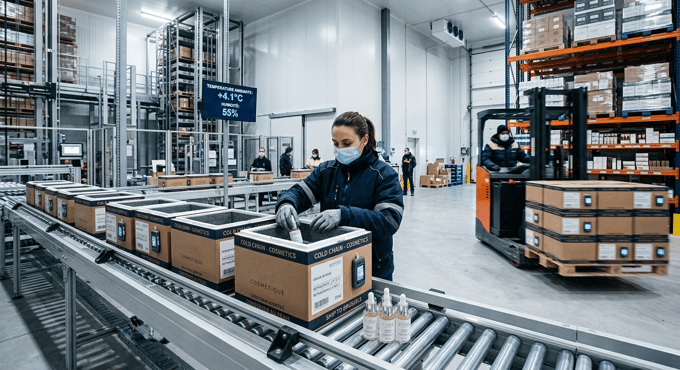
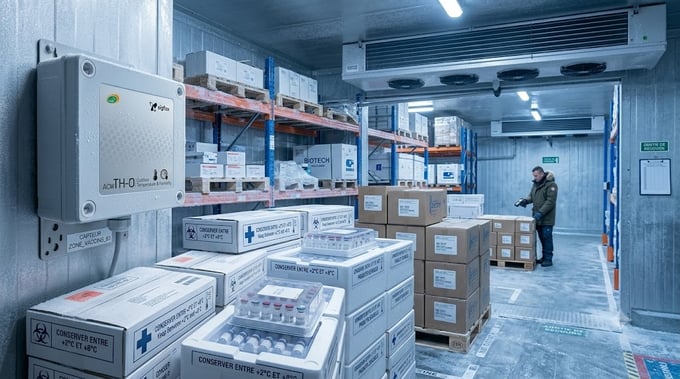
Food and pharmaceutical cold chains
In these sectors, cold chain continuity is a critical quality and compliance issue.
Intelligent monitoring enables continuous surveillance of cold rooms and refrigerated transport. It ensures immediate detection of deviations and automatic recording of temperature histories. This limits batch losses and secures quality audits.
Monitoring hot water systems and legionella risk
Controlling domestic hot water networks is a key regulatory issue in public buildings, healthcare establishments and industrial sites.
By monitoring DHW temperatures, we can guarantee compliance with regulatory thresholds, detect malfunctions early and reduce the health risks associated with legionella.
Energy optimization for industrial buildings
Environmental data enable HVAC systems to be fine-tuned to actual conditions.
This reduces excess energy consumption, improves occupant comfort and optimizes overall building performance. Tracking CO₂ and air quality indicators also contributes to better environmental management of sites.
What are the concrete benefits for manufacturers?
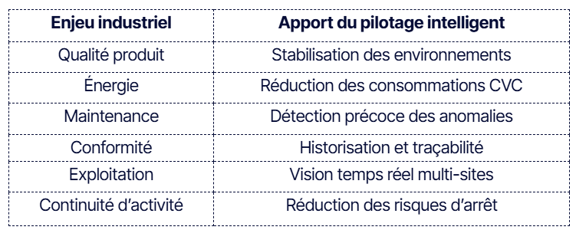
Why is LoRaWAN particularly well-suited?
LoRaWAN meets the constraints of industrial environments thanks to extensive coverage, low deployment costs and no cabling.
It enables long sensor autonomy and supervision of large sites or multi-buildings.
This technology facilitates retrofit projects by integrating monitoring solutions without major modifications to existing installations. It also simplifies multi-site deployments thanks to a centralized, scalable architecture.
Temperature and humidity monitoring is no longer limited to regulatory control. Thanks to industrial IoT technologies and LoRaWAN, this data becomes a lever for operational control.
This approach makes it possible to anticipate drifts, reduce energy costs, improve quality and secure critical environments.
Intelligent temperature and humidity control is a direct lever for industrial performance and optimized operations.
FAQ - Understanding intelligent temperature/humidity control
What's the difference between supervision and intelligent control?
Supervision monitors data. Intelligent control exploits trends to anticipate and automate certain actions.
Which sectors are concerned?
Food processing, pharmaceuticals, logistics, manufacturing, technical services, healthcare.
Does LoRaWAN require a heavy infrastructure?
No. Deployment is generally rapid and unobtrusive.
Can these solutions be integrated into existing systems?
Yes, industrial IoT architectures are designed to interface with existing supervision and HVAC systems.
What are the fastest gains?
Energy savings and improved traceability are often visible very quickly.
See also
- WISE-4250-S232: Wi-Fi solution for temperature and humidity
- Temperature and humidity monitoring in a bakery
- Epidemic prevention solutions: Measure air quality, temperature and CO2 in your buildings